
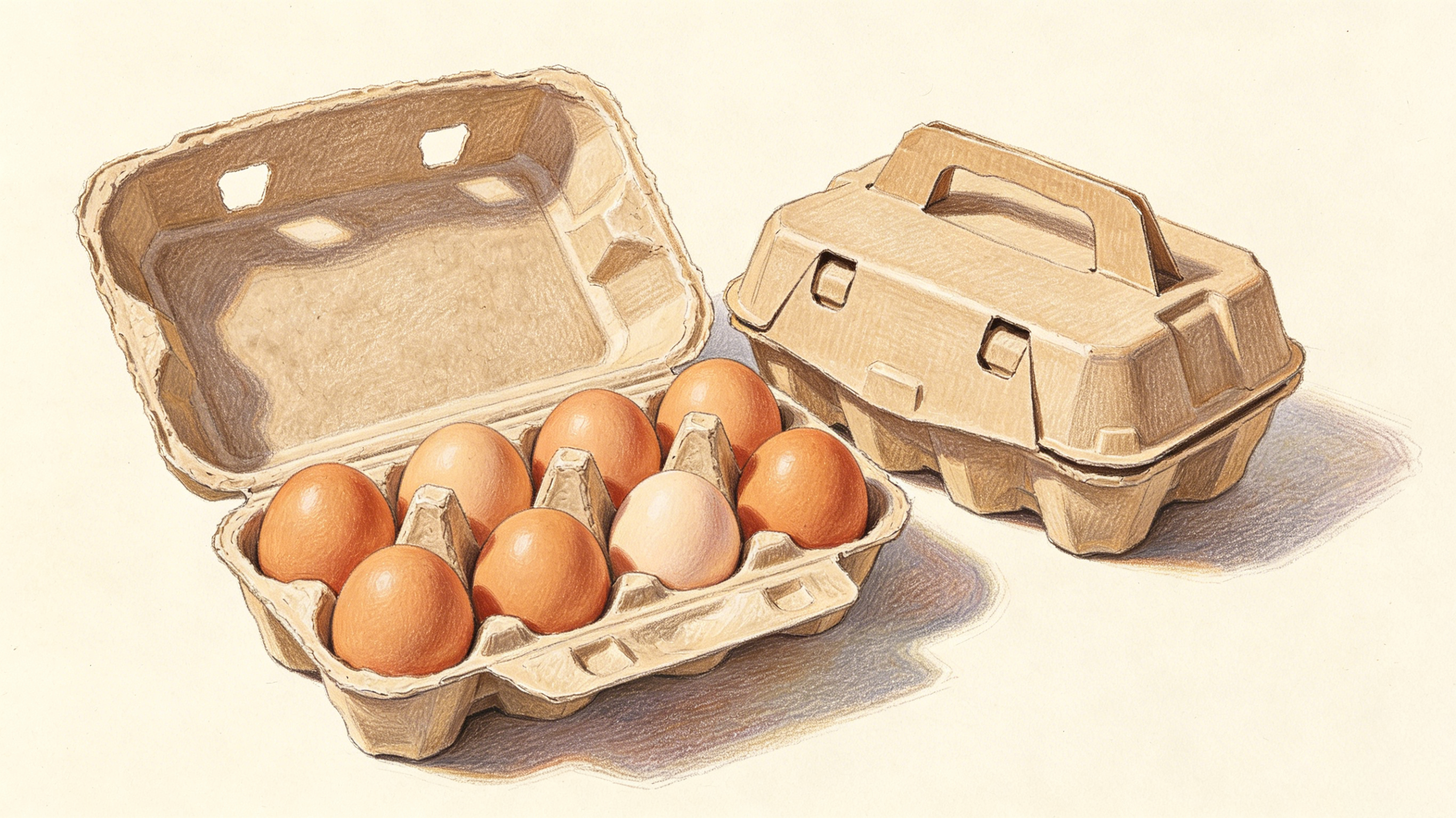
Egg trays and egg cartons
Paper pulp packaging for egg transport, retail egg cartons, egg boxes, and poultry packaging lines.

Molded pulp packaging solutions
Molded paper pulp packaging is used for egg cartons, bagasse tableware, cup carriers, protective inserts, and custom molded fiber products. DWELLPAC helps manufacturers plan the molds, equipment, and post-processing steps needed to produce these packaging products.
From product drawings and sample review to pulp molding tooling, hot pressing, trimming, labeling, and inspection, the goal is to connect packaging design with a stable production process.
Definition and positioning
Molded pulp packaging, also called molded fiber packaging, paper pulp packaging, or molded paper packaging, is shaped from paper pulp or plant fiber slurry with dedicated molds. It can be designed for protection, stacking, retail display, food contact, or downstream labeling.
This page introduces the major packaging applications, the production steps behind them, and the molds and equipment manufacturers need to build a molded pulp packaging line.
Applications
The same pulp molding principle can support many product categories. The final tooling, forming depth, wall thickness, drying method, hot pressing requirement, and post-processing equipment should be matched to the packaging type.
Paper pulp packaging for egg transport, retail egg cartons, egg boxes, and poultry packaging lines.

Plant fiber tableware such as plates, bowls, trays, clamshells, and food containers.

Molded pulp products for beverage packaging, cup holding, take-away packaging, and foodservice use.

Custom molded fiber inserts for electronics, cosmetics, spare parts, tools, and fragile products.
Production workflow
A molded paper pulp packaging project normally starts with the product structure and ends with a finished part that can be stacked, packed, labeled, or inspected. Each step affects product quality and production stability.
Recycled paper, paper pulp, or plant fiber is mixed with water and prepared as pulp slurry. The raw material and slurry condition influence product strength and surface quality.
The slurry is shaped on forming molds. Mold design controls cavity layout, wall thickness, suction, demolding, and machine compatibility.
Products can be dried or hot pressed depending on the required surface, shape control, appearance, and dimensional stability.
Edges, holes, openings, and final outlines can be completed with punching, cutting, or other post-processing equipment.
Retail packaging such as egg cartons can use wet glue labeling, sticker labeling, or printing before packing and shipment.
Tooling
For custom molded pulp packaging, tooling is often the most important production decision. A mold must match the product structure, forming machine, transfer method, hot press requirement, stacking height, and final packaging use.
DWELLPAC can review drawings, sample photos, cavity layout, demolding direction, forming size, and post-processing needs before confirming the mold and production direction.
Equipment planning
The right machine configuration depends on the packaging application, product size, production capacity, drying method, surface requirement, automation level, and downstream process.
| Production stage | Equipment or tooling | Why it matters |
|---|---|---|
| Pulping | Pulp preparation system | Prepares the paper pulp or plant fiber slurry for stable forming. |
| Forming | Pulp molding machine and forming molds | Creates the packaging shape and controls cavity layout, thickness, and demolding. |
| Surface control | Hot press machine | Improves shape accuracy, surface finish, and dimensional stability. |
| Finishing | Punching and cutting machine | Completes edges, holes, openings, and product outlines. |
| Retail packaging | Wet glue labeling and printing or sticker labeling | Supports branded egg carton packaging and downstream presentation. |
Related DWELLPAC pages
Use the links below to move from application planning to equipment and tooling review.
FAQ
These questions help clarify common search terms such as molded pulp, molded fiber, paper pulp packaging, tooling, and production equipment.
Molded pulp packaging is a shaped packaging product made from paper pulp, recycled paper, or plant fibers. It is formed with molds and used for egg cartons, foodservice packaging, protective inserts, cup carriers, and custom molded fiber packaging.
The terms are often used for similar packaging. Molded pulp usually refers to paper pulp based products, while molded fiber can also include plant fiber materials such as bagasse. Buyers may also search for moulded pulp or moulded fibre in UK spelling.
A molded paper pulp packaging line may include pulping, forming, drying, hot pressing, trimming, labeling, inspection, and packing equipment. The final configuration depends on the product type, capacity, surface requirement, and automation level.
Tooling controls the product shape, cavity layout, demolding, stacking, surface quality, and machine compatibility. Good pulp molding tooling helps improve production stability and final packaging quality.
DWELLPAC focuses on equipment, molds, tooling, and production support for manufacturers who produce molded pulp packaging. Project scope can be reviewed based on product drawings, samples, target capacity, and existing machine conditions.
Project review
Send your product drawing, sample photo, current machine condition, target capacity, and surface or post-processing requirements. DWELLPAC can help review the mold, equipment, hot pressing, trimming, labeling, and inspection direction.
